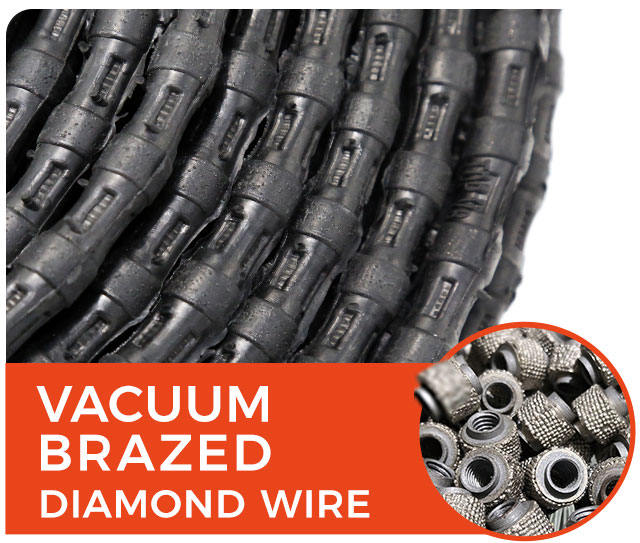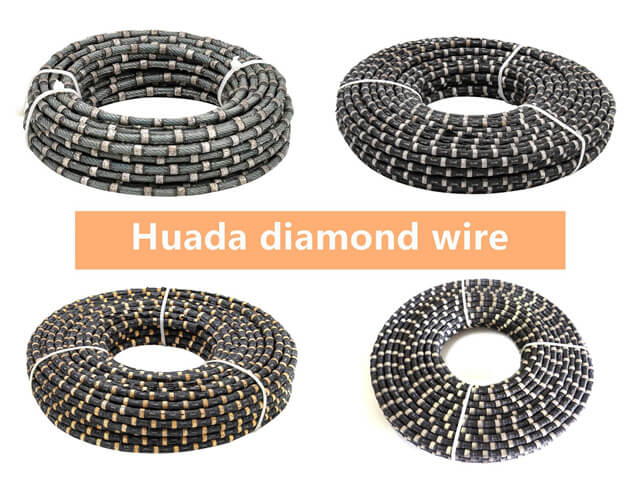

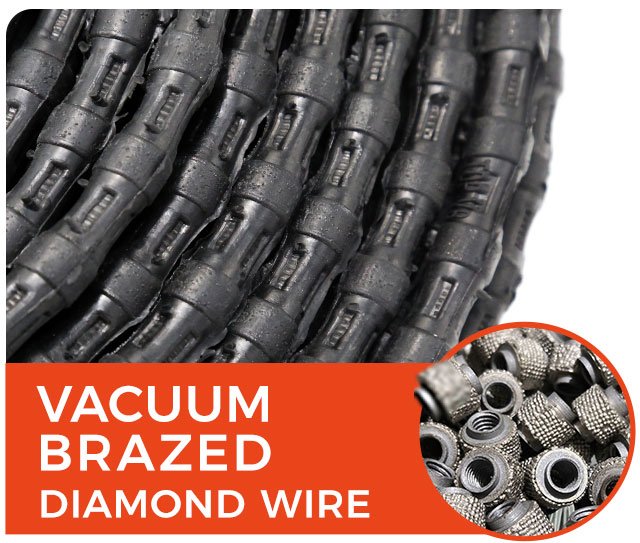
This vacuum-brazed diamond wire is presented for reinforced concrete and demolition work involving concrete, steel-bearing structures and difficult access. The original record names bridges, posts, chimneys, nuclear reactors and underwater structures as application contexts.
Where the wire is intended to work
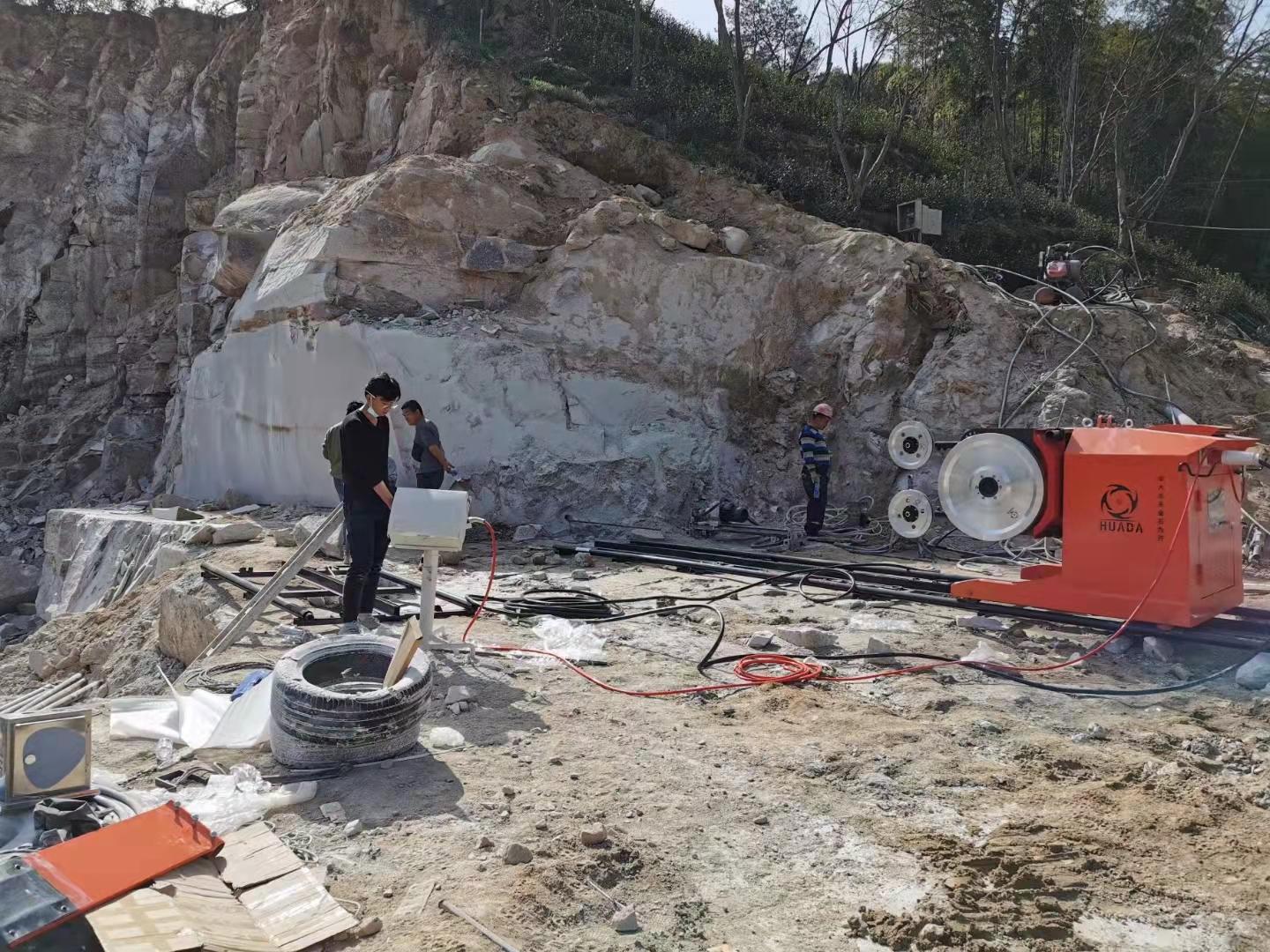
The source emphasizes low vibration, low noise and low dust, together with the ability to follow irregular structures or operate in limited space. Those are product-positioning claims, not a substitute for a cutting plan. Identify concrete thickness, reinforcement, embedded steel, available wire path, access and the parts that must remain undamaged before choosing the wire construction.
For underwater or controlled demolition work, include the site method and machine arrangement in the technical review.
Read the saved parameter rows carefully
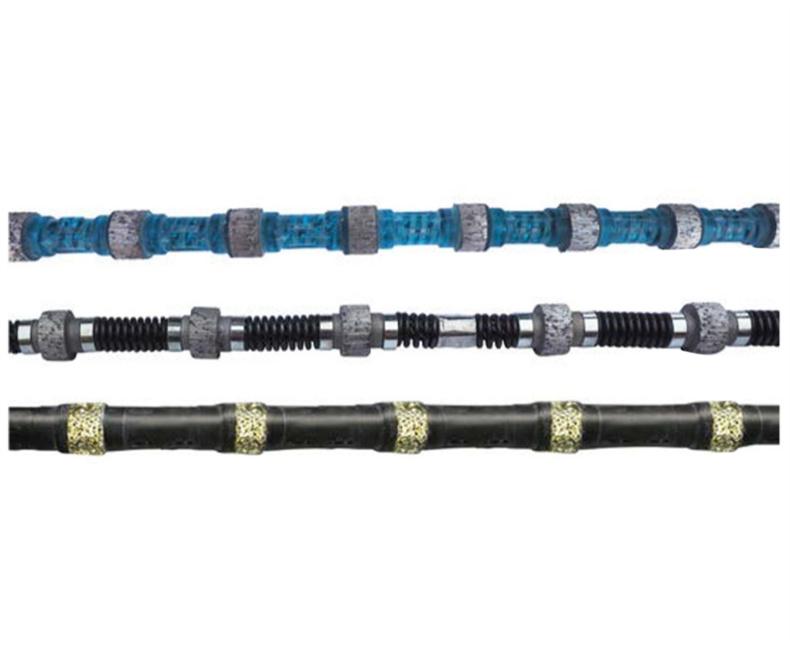
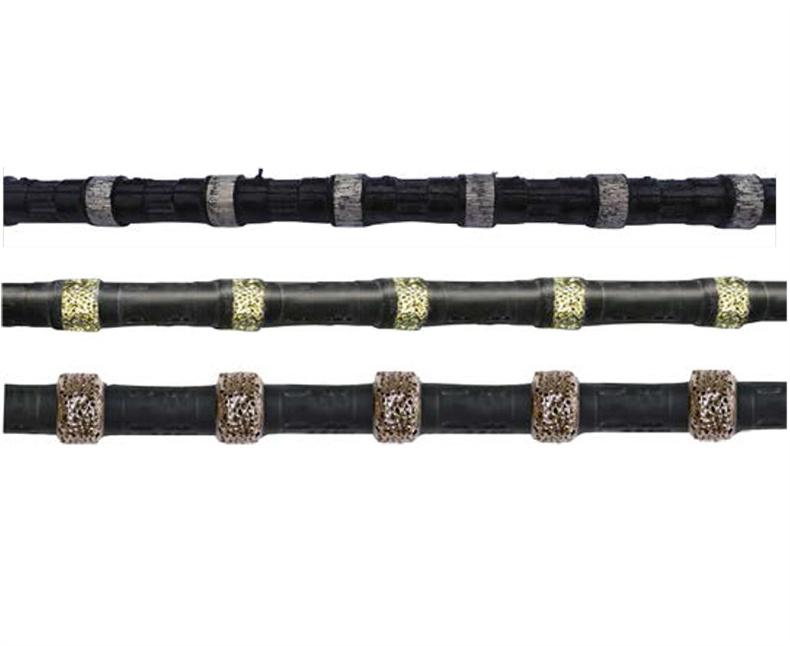
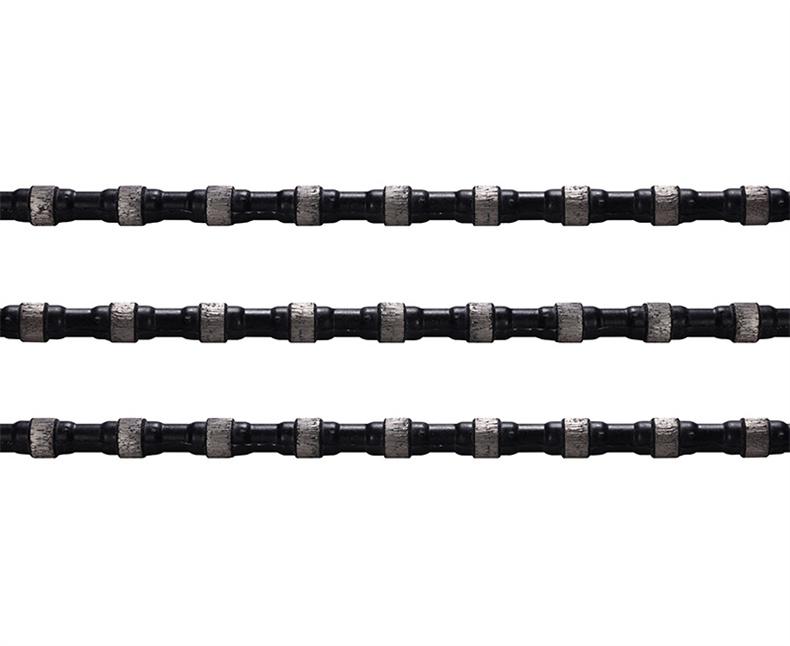
The captured table lists Φ10.2 and Φ9.2 mm diameters, rubber-plus-spring assembly, and applications for steel structure, reinforced concrete and normal concrete. It also contains bead entries of 40, 48, 44 and 53, with cutting-speed ranges from 0.8–6.0 m²/h and production ranges from 0.5–2.0 m²/m across different rows. Because the old table alignment is not fully clear, the quotation must return one complete confirmed row rather than mixing values from adjacent applications.
Demolition wire selection record
- Structure, concrete and reinforcement survey
- Steel content and required separation sequence
- Machine, pulley layout and available wire path
- Confirmed diameter, bead count and assembly
- Cooling, cut rate and wire-use record
The page attributes cutting efficiency to Huada Even Distribution technology. Verify that manufacturer claim on a representative section and retain the wire label, measured cut area, time and final wire condition with the project record.
Original product images