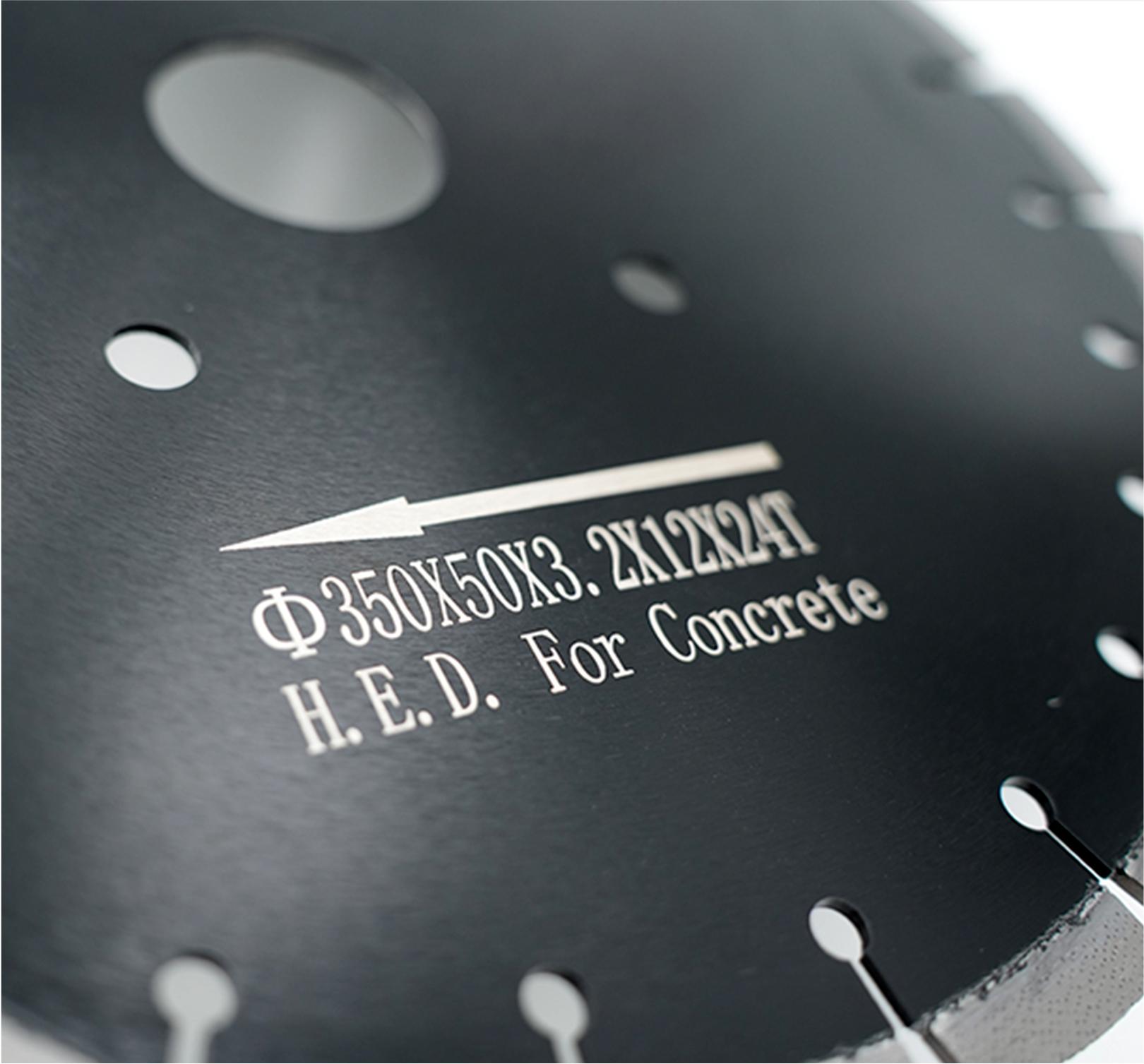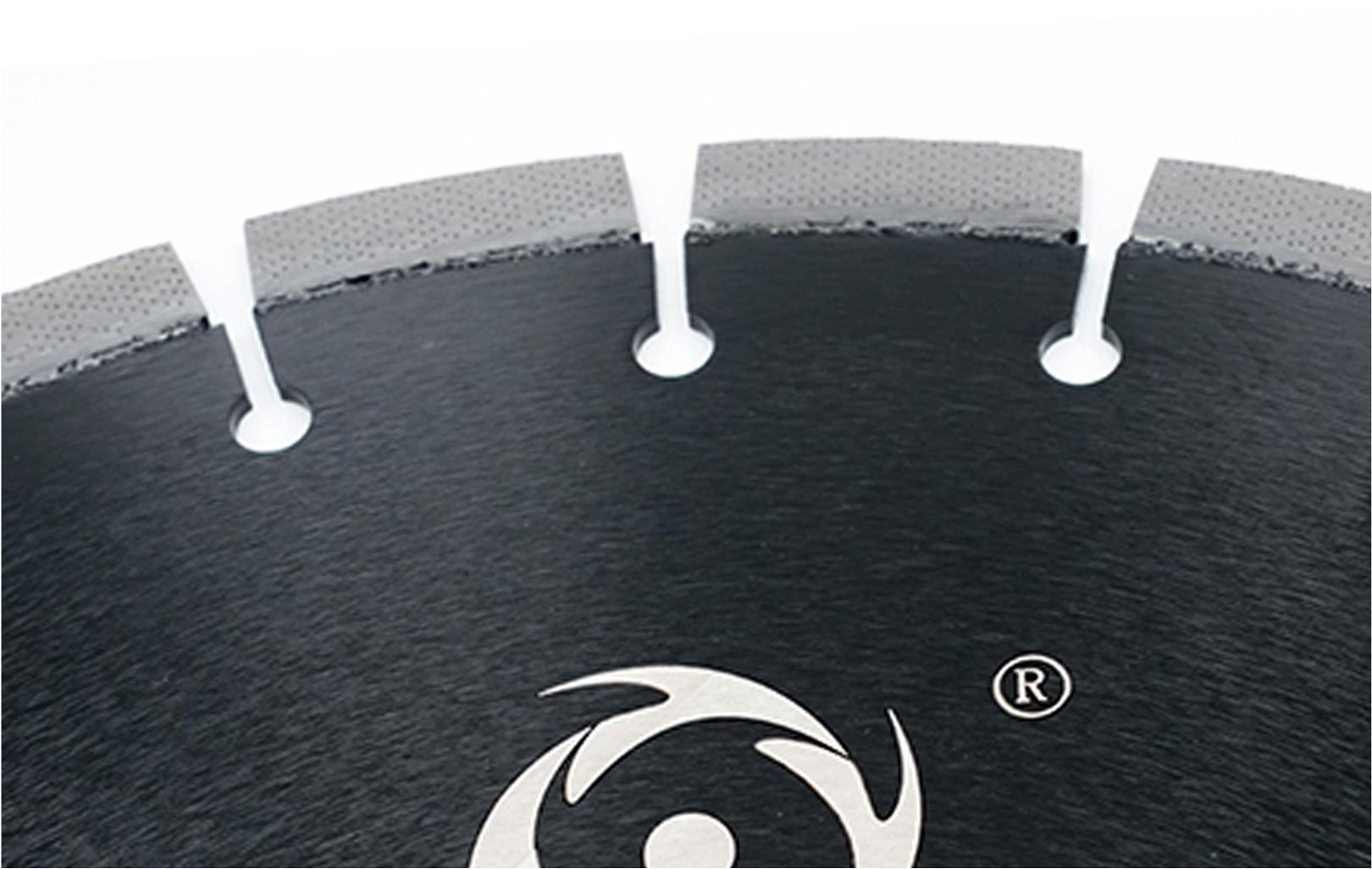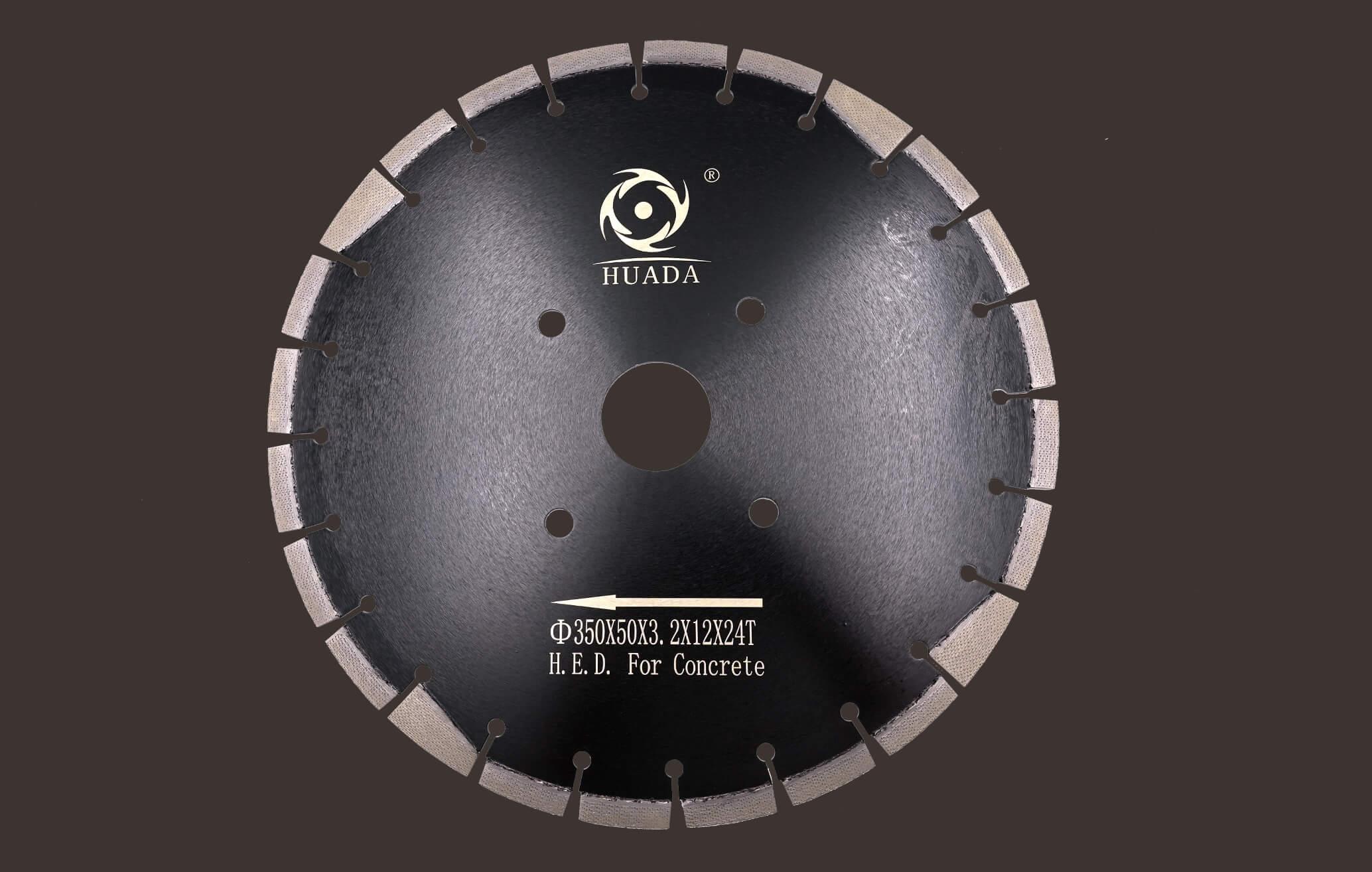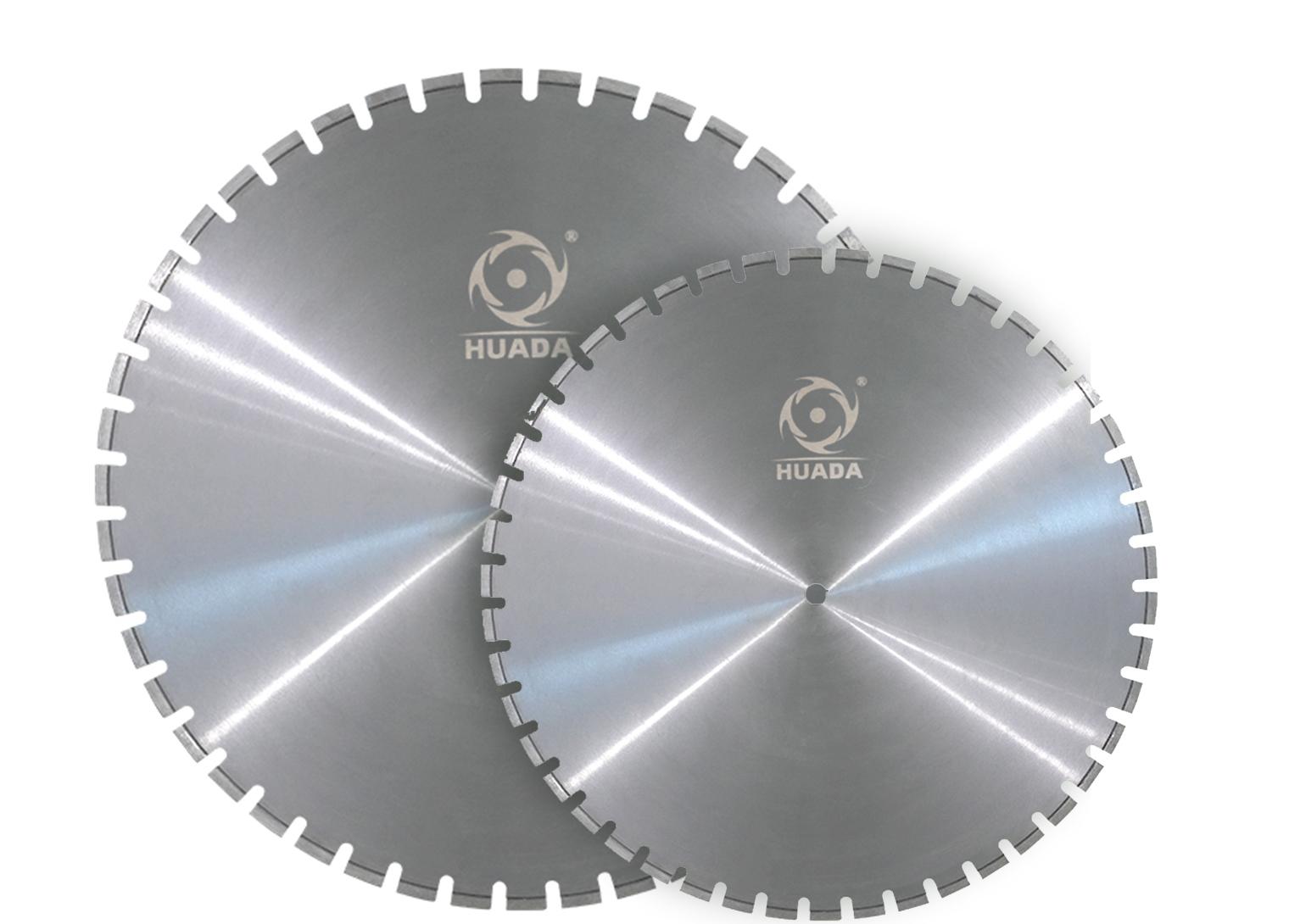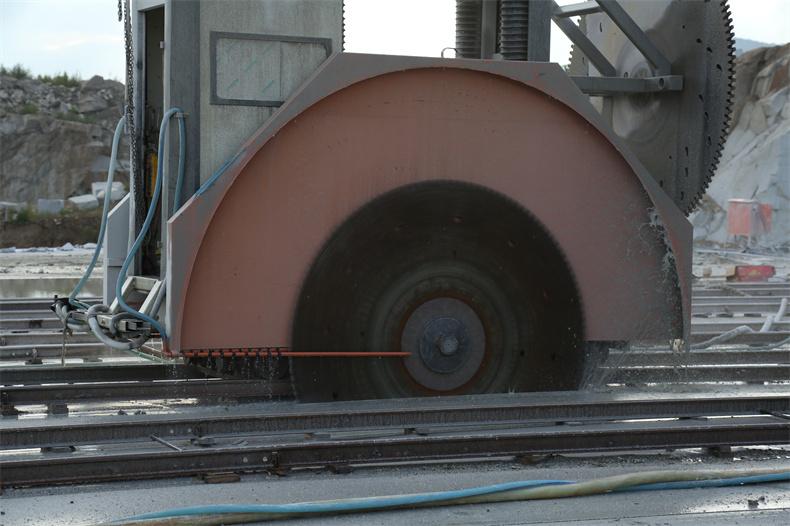

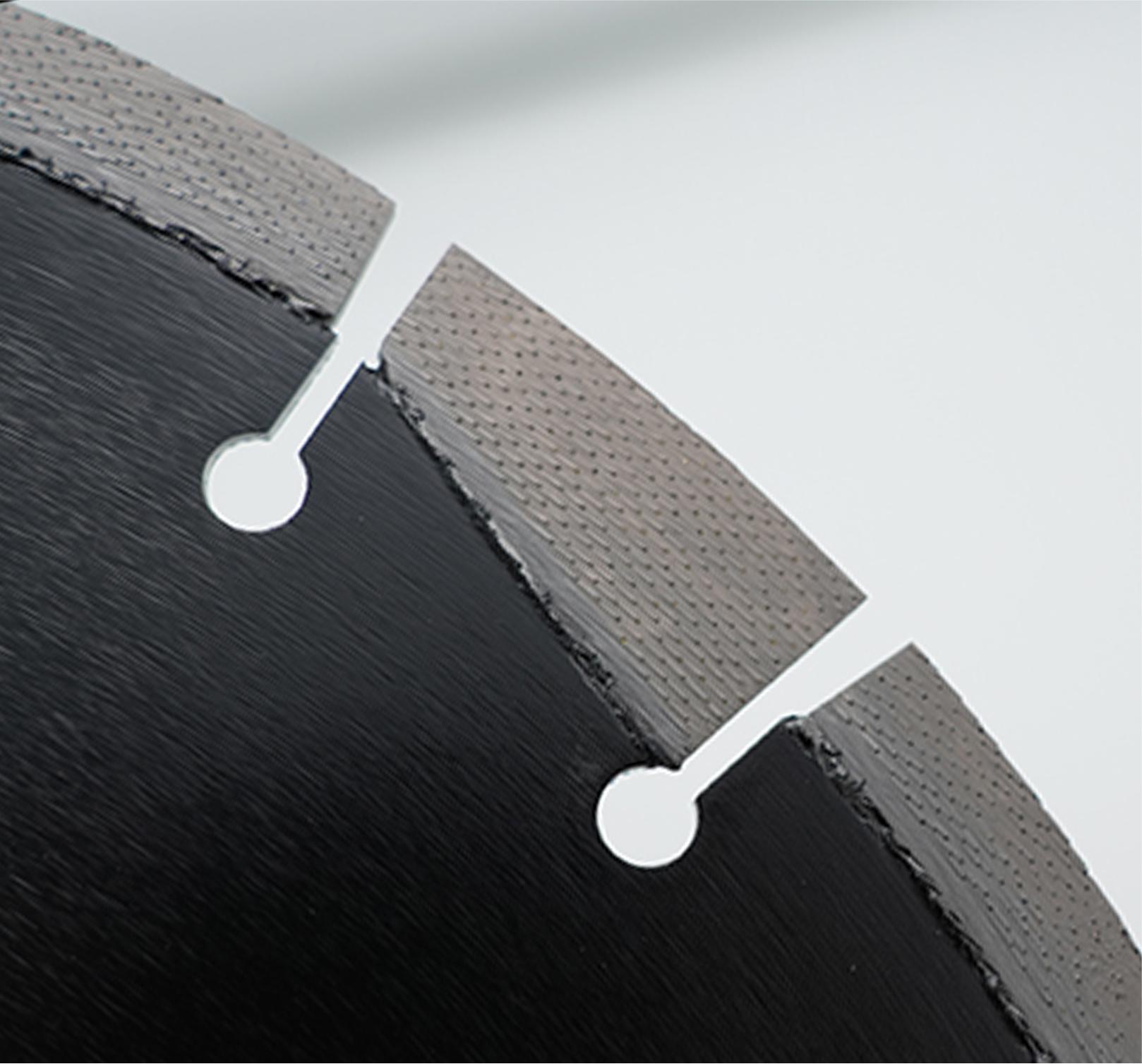
This H.E.D. laser-welded blade is for asphalt roads, driveways, sidewalks, repairs, grooves and joints. The source focuses on segment retention and heat management for softer but highly abrasive paving material.
Asphalt is the defining application
The saved description links laser welding to bond strength under demanding cutting conditions and describes diamond concentration, cooling features and resistance to heat. It also names handheld and walk-behind saws. Select the blade from the asphalt composition, cut depth, saw, arbor and wet/dry method; do not copy a concrete setup merely because some diameters and segment dimensions look similar.
The published recommended linear speed for asphalt is 55–60 m/s, subject to the machine and confirmed blade row.
Protective and normal layouts
The protective table covers 300, 350, 400, 450 and 500 mm diameters. These rows use 40 mm segment length, widths from 3.0–4.0 mm and a 12 mm height, with normal and protective segment counts identified separately. Normal-segment rows extend through 600 and 800 mm, where width and disc thickness increase. Core options captured in the table include 20, 22.23, 25.4, 50 and 60 mm.
Return the exact diameter, disc thickness, segment count and core in the quotation rather than describing the product only as an asphalt blade.
Paving-cut acceptance sheet
- Asphalt layer and required depth/length
- Saw model, arbor, flange and cooling method
- Protective or normal segment layout
- Selected diameter and operating speed
- Cut rate, tracking, heat and wear record
For joint or groove work, inspect line accuracy and edge condition as well as speed. Retain the blade label and paving material record so a replacement can be compared under the same application rather than against an unrelated concrete cut.
Original product images